
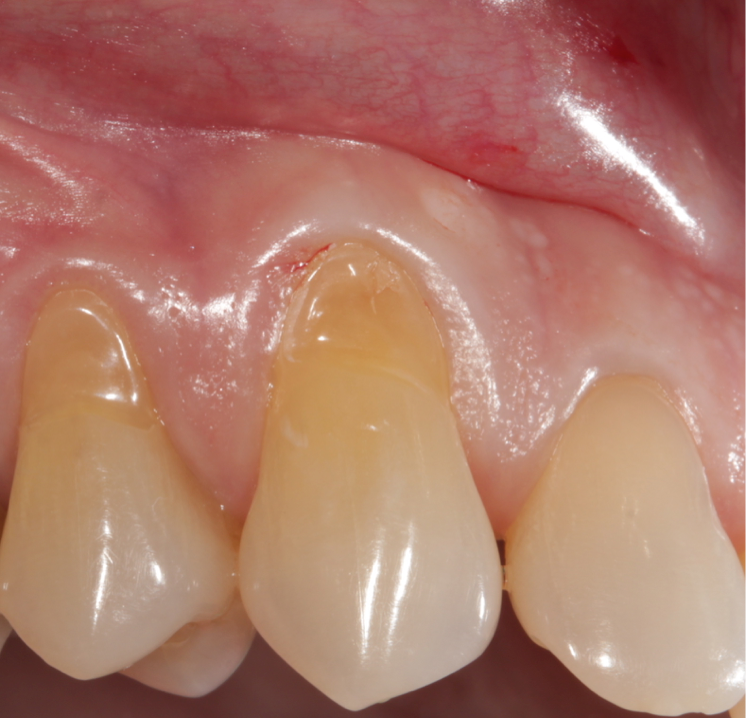
Receding gums can make a tooth look longer or leave its root exposed. You may notice a change in the gumline or discomfort with cold drinks. A dental examination can identify the cause and help you choose the right next step.
This guide explains gum recession in adults. It cannot tell you whether a particular tooth needs treatment. If you have recently had gum surgery, follow your treating clinician’s instructions instead of changing your routine using general advice.
What causes receding gums?
Several factors can contribute. Cambridge University Hospitals lists forceful brushing, gum disease, naturally thin gum tissue and the position of a tooth in its supporting bone among the causes. More than one factor may be involved.
Recession describes where the gum margin sits. It does not, by itself, tell you whether you have active gum disease or how severe it is. Avoid judging the problem only from a photograph or the amount of tooth you can see.
Gum disease can damage the tissues supporting teeth. Smoking and other tobacco use increase the risk and can impair healing. Tell your dentist about tobacco use, diabetes and your medical history so these can be considered during assessment.
Signs that deserve a dental check
Arrange an appointment if your gumline seems to be changing, your teeth look longer, or you develop sensitivity. Bleeding, swelling, persistent bad breath and discomfort when chewing also need assessment. The NIDCR gum-disease guide explains these warning signs.
Sensitivity is not proof of recession. Decay, cracks, worn fillings and enamel wear can also cause it. The American Dental Association’s sensitivity guide describes why checking the cause matters.
Ask for urgent dental care if your gums are very sore and swollen or an adult tooth becomes loose. The NHS gum-disease guidance also advises urgent assessment for mouth ulcers or red patches, or a lump in the mouth or on the lip. Do not wait for your next routine check-up with these symptoms.
What will the dentist check?
Your dentist can examine the gumline, check for bleeding and measure the spaces around the teeth with a small dental probe. They may recommend X-rays to assess supporting bone. These findings help distinguish recession from deeper gum problems and guide whether specialist advice is appropriate.
Bring a list of your medicines and describe when you first noticed the change. Useful questions include: Is gum disease present? Is my brushing pressure contributing? What should we monitor? What are the benefits and limits of each treatment?
How are receding gums treated?
There is no single treatment ladder based only on how far the gums have moved. The cause, symptoms and condition of the surrounding tissues matter. Your dentist may discuss the following options.
Care for gum disease
If gum disease is present, treatment aims to control it. This may include professional cleaning or cleaning below the gums, called scaling and root planing. Continued home care and follow-up remain important. Cleaning treats plaque and deposits; it is not a promise that an exposed root will become covered again.
Help for sensitivity
A dentist may recommend desensitising toothpaste or a professional fluoride treatment after checking the tooth. These can help manage sensitivity, but they do not replace an assessment of its cause. Follow the product instructions and seek review if discomfort continues.
Gum grafting in selected cases
A gum graft can add tissue and may cover an exposed root or reduce sensitivity. The American Academy of Periodontology explains gum graft surgery as one option for recession. Whether it is suitable, and how much coverage is possible, depends on an individual assessment.
Surgery has risks, including bleeding, infection, discomfort and changes in gum appearance. Healing and follow-up vary. Ask about alternatives and the expected benefit for your tooth; a fixed recovery promise is not a substitute for an individual plan.
How to care for your gums at home
- Brush twice daily with fluoride toothpaste and a soft-bristled brush.
- Use gentle pressure. Ask your dentist to demonstrate a technique suited to your gumline.
- Clean between your teeth daily with floss or an appropriately sized interdental brush.
- Avoid tobacco and ask for support if quitting is difficult.
- Attend reviews at the interval recommended for your needs.
The ADA brushing guidance recommends gentle, short strokes and cleaning all tooth surfaces. Our twice-daily brushing guide can help you build a routine. Do not scrub harder to try to move the gumline back.
Common questions about receding gums
Can toothpaste make my gums grow back?
Do not rely on toothpaste to rebuild lost gum tissue. A sensitivity toothpaste may ease symptoms, while treatment addresses the cause. Ask whether monitoring, professional care or a graft is appropriate.
Does every receding gum need surgery?
No. A surgical decision needs an examination and discussion of your symptoms, tissue condition and goals. Ask what benefit surgery is expected to provide and what follow-up would be needed.
Should I stop brushing if my gums bleed?
Continue gentle cleaning and book a dental assessment. Bleeding is a reason to check your gum health, rather than to scrub harder. Very sore, swollen gums or a loose adult tooth need urgent dental care.
Arrange a dental assessment in Hyderabad
If you have noticed a changing gumline, contact Infinite Smiles to enquire about an appointment, or call +91 93927 47123. The clinic is at Flat No. 302, Main Road, Kamalapuri Colony Phase III, Banjara Hills, Hyderabad 500073. An examination is the starting point for discussing your options.
Photo: Funkynatsuki, via Wikimedia Commons, CC BY-SA 4.0. Image unchanged. Educational example, not an Infinite Smiles patient or treatment result.